
No styles match your search. Try a different word.
Normal text behaves. Glitch text looks like the file got damaged on purpose: letters stacked with scratches, marks crawling above and below the line, words that seem to buzz. Type anything in the box above and this glitch text generator rebuilds it at four strengths, from a light static crackle to a full corrupted stack. Pick your level, copy it, and paste it where plain text is too quiet.
A glitch text generator corrupts your normal letters by stacking small Unicode marks above, below and through them. The result is real text that looks broken, haunted or digitally damaged. You choose how heavy the damage is, tap to copy, and paste it into names, comments and posts.
One word at four levels of damage
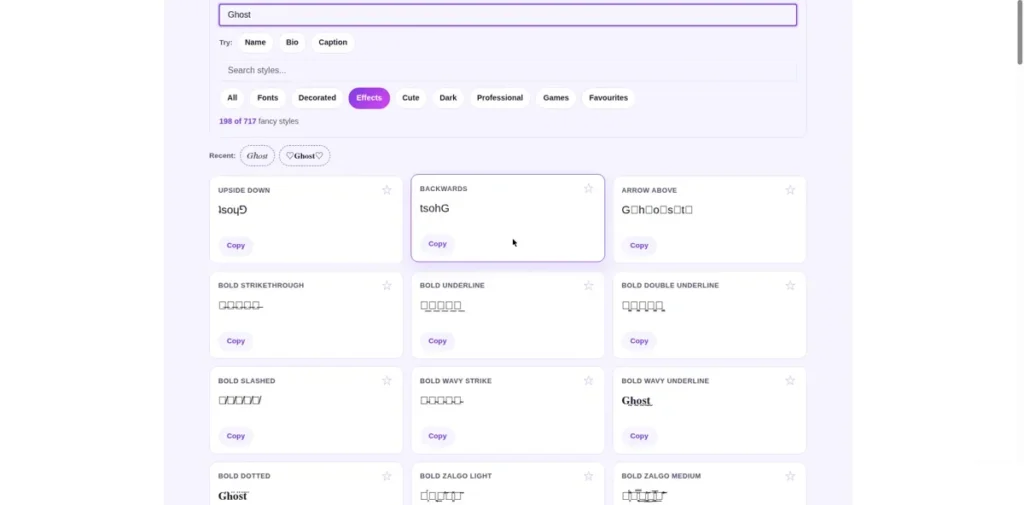
Glitch is a dial, not a switch. The styles above are ordered by intensity for exactly this reason, and the same short word shows the ladder clearly.
At the light level, a word like Hello picks up a few scratches and stays easy to read: H̷e̷l̷l̷o. This is the level for comments and captions, where the joke still needs to land.
At the medium level, marks start stacking above and below the letters, and the word grows a fuzzy outline. It reads fine at a glance, but your eye slows down, which is the effect most people actually want.
At the heavy level, the stack becomes a small tower. The word is still in there, but it fights its own decoration, and tall lines can push into the text around them.
Full zalgo is the deep end: dozens of marks on every letter, a word that looks possessed. Save it for single words and short shocks, never for sentences anyone must read.
How the corruption actually works
There is no image trick and no special font file behind glitch text. The damage is built from a real part of Unicode called combining marks.
A combining mark is a character that owns no space of its own. The official Unicode Combining Diacritical Marks chart defines the family: small strokes, hooks and tildes designed to attach to the letter before them, the same system that puts the accent on the e in café.
Accents use one mark at a time. Glitch text abuses the system politely: it attaches five, ten or forty marks to a single letter, some pointing up, some pointing down, some striking through the middle. Your phone stacks them all, and the letter disappears under its own pile of scratches.
That is also why glitch text is still text. You can copy it, paste it, and delete it letter by letter. The marks travel with the word because they are part of the word, character by character.
Choosing a safe level
The lighter styles above carry the readable end of the family, and they are the ones to reach for anywhere other people must understand you. Light glitch on a name, a heading or a short comment reads as style. Heavy glitch reads as a puzzle.
A good rule: the longer the text, the lighter the level. One glitched word inside a plain sentence works like a sound effect. A whole paragraph at medium level is work to read, and at heavy level it is decoration, not communication.
Usernames deserve the most care of all. A name is read at small sizes, in lists, often by people searching for it letter by letter. Light or medium keeps it findable. The stylish name maker with dark gaming name styles pairs glitch touches with name fonts in safer doses for exactly this reason.
If corrupted is a mood you like beyond glitch itself, the cool text generator with aesthetic corrupted mixes blends softer versions into decorated caption and bio styles.
Where glitch breaks, honestly
Every app renders combining marks with its own rules, and this is where heavy stacks meet their limits. Some apps cap how tall a line of text may grow, so a heavy stack gets clipped flat at the top or bottom and looks cut off.
Other apps and older systems strip combining marks away entirely during posting or import. Your towering word arrives as plain letters, undamaged and slightly disappointing.
Chat and comment systems can also treat dense mark stacks as suspicious. A comment that is mostly marks may trip simple spam filters that look for text with very few real letters, so keep real words in charge and marks as the garnish.
When a stack matters, test it in the real app with a throwaway comment first. And when you want the exact opposite of corrupted, the tiny text generator, the opposite end of the size scale shrinks words down to near whispers instead.
Making glitch readable on purpose
Skilled glitch use is mostly restraint. Glitch the word that carries the feeling, a name, a title, a punchline, and leave the sentence around it clean.
Mixing glitch into full lines is a job for control, which is why the text generator for clean full-line styling keeps your sentences tidy while single words get the damage. Short lines, one glitched word each, is the pattern that memes and edits use because it works.
Pairing matters too. Glitch sits naturally next to dark and horror themes, gaming tags and Halloween posts. It fights with anything that needs trust or clarity, like prices, instructions or anything a stranger must act on.
And when the mood passes, the font generator for normal alphabets after the glitch and the fancy text generator for calmer style families are one tap away, no cleanup needed beyond pasting fresh text.
Frequently asked questions
Short answers to the questions readers ask most about glitch and zalgo text.
What is the difference between glitch text and zalgo text?
They are cousins built from the same parts. Glitch text is the wider family: any styled text that looks digitally damaged, including slashed letters, static scratches and stacked marks. Zalgo is the extreme member of that family, named after an old internet meme about a corrupting presence. A zalgo word carries heavy stacks of combining marks above and below every letter, so it looks possessed rather than merely scratched. Every zalgo text is glitch text, but light glitch is not zalgo.
Why does heavy glitch text break or get clipped in some apps?
Because the marks stack upward and downward without limit, and apps draw text inside fixed line heights. When a stack grows taller than the line an app allows, the top or bottom of the pile is simply cut off. Some apps go further and remove combining marks when you post, to keep layouts tidy. The letters themselves are fine; it is the pile on top of them that collides with the app’s drawing rules.
How much glitch can a username handle before it is unreadable?
A light level, or a medium level on a short name, is the practical ceiling for usernames. Names are shown small, listed beside many others, and searched for by people typing the plain spelling. Once stacks get tall, the name stops scanning as a word and starts reading as noise, and friends may not recognise it in a list. Glitch one part, like the first letter or a tag at the end, and keep the core of the name clean.
Can glitch text get my comment or account flagged as spam?
It can, in high doses. Some spam filters look for posts with very few normal letters compared to symbols and marks, and a heavy zalgo comment matches that shape. A short glitched word inside a normal sentence is very unlikely to cause trouble. Keep your message mostly real words, use heavy stacks rarely, and avoid repeating the same glitched block across many comments, which is the behaviour filters dislike most.