
No styles match your search. Try a different word.
A Facebook feed is a wall of identical plain text, and one styled line is all it takes to stop a thumb. Type your post, comment or group name in the box above and these facebook fonts rebuild it in clean bold, serif and script styles ordered for reading first, with one tap copy. This page is also honest about the one place styled text does not belong on Facebook, and that section may save you a rejected name.
Facebook fonts are stylish Unicode letters you copy and paste into Facebook because the app offers almost no text styling of its own. You generate a style here, tap to copy, and paste it into posts, comments and group names, where it appears as real text for every reader.
Where facebook fonts work, and where they do not
Facebook is not one text box either, and styled text has a different welcome in each part of it. The table below is the honest map this page exists to give you.
| Place on Facebook | Styled text works? | Honest note |
|---|---|---|
| Posts on your profile, Pages and Groups | Yes | The main stage for styled text; bold first lines read like headings |
| Comments and replies | Yes | Keep comments mostly plain, style a word or a short line |
| Bio and intro lines on profiles | Yes | Short styled lines paste in cleanly |
| Group names | Mostly | Group names accept some styling, but heavy symbols can hurt how members find the group |
| Personal profile names | Restricted | Facebook has name rules and may reject symbol-heavy or fake-looking names |
| Page names | Use caution | Page names carry their own rules and sit close to your brand, so plain is safer |
Every claim in this table is the general, testable kind: paste a styled line into a post and it shows; try to rename a personal profile into full fancy script and Facebook’s name review may refuse it. The exact name policies live in Facebook’s own help pages and can change, so treat names as the caution zone and posts as the playground.
Styling posts that people actually read
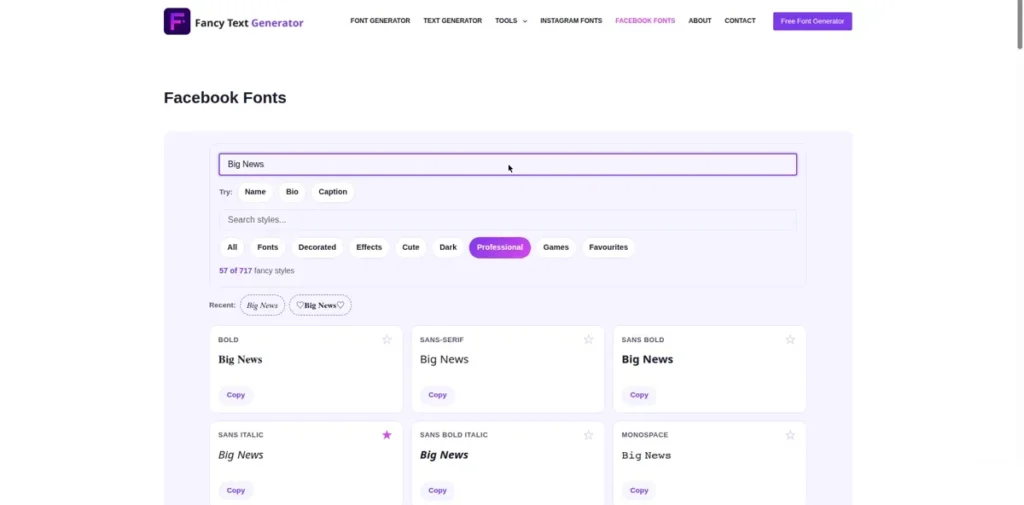
Feed posts are long-form compared to most apps, which changes what good styling looks like. The styles above lead with the Professional set for a reason: sans bold, serif bold, italic and neat script that a reader can scan across a whole post.
The pattern that works is a styled headline line, then plain paragraphs. Your bold first line does the job of a heading in a place that has no headings, and the plain text under it stays effortless to read.
The bold text generator for post headings is the specialist for that headline line, with every bold weight compared. For posts that run long, with quotes and sections, the text generator for longer Facebook posts styles whole blocks while keeping your line breaks.
Comments reward the opposite instinct. A fully styled comment looks like an advert dropped into a conversation. One styled word, a name or a short reaction line, reads as personality instead.
Names on Facebook: the caution zone
Personal profile names are where readers get hurt, so this page will not pretend otherwise. Facebook asks for the name you use in everyday life, reviews name changes, and its rules restrict symbols, unusual capitalisation and decorative characters in personal names.
A full fancy script profile name can be rejected at the change screen or flagged later, and repeated failed attempts can lock further changes for a while. None of that risk is worth a prettier profile line, especially when your posts and bio carry styled text freely.
Display-style name ideas still have a home: group names with light styling, Page tab text, event titles and post headlines all carry fancy lettering without touching the restricted field. The stylish name maker for display name ideas builds those, and the cursive text generator for script post text covers the elegant end for posts and announcements.
Search, screen readers and older readers
Two quiet costs follow styled text onto Facebook, and both matter more here because the audience skews older and wider than on other apps.
Facebook search matches plain spellings. A group or post titled fully in fancy letters may not surface when members search its normal words, so keep searchable titles, group names especially, carrying their key words in plain text somewhere.
Screen readers read many styled alphabets as symbols or letter names, which turns a heartfelt long post into slow listening for a blind reader. The fix costs nothing: keep the essential sentences plain, and let styled lines be the headline and the garnish, never the only copy of the message.
The full library behind this page lives in the font generator library with post-ready fonts, and every style here also sits inside the fancy text generator for every platform, where the same words can be dressed for other apps too.
Frequently asked questions
Short answers to the questions readers ask most about Facebook fonts.
Why did Facebook reject the fancy name I tried to set?
Because personal profile names follow Facebook’s name standards, which ask for the name you use in everyday life and restrict symbols, decorative characters and unusual formatting. Fancy Unicode letters read to that system as symbols rather than letters, so a fully styled name is refused at the change screen or can be flagged afterwards. It is a policy limit, not a fault in the generator. Keep your profile name plain, and use styled text where Facebook welcomes it: posts, comments, bio lines and group content.
Do facebook fonts work in posts, comments and Messenger?
Yes, in all three. Posts and comments are plain text areas, and styled Unicode letters paste into them and display as real text for your readers. Messenger chats accept the same pasted styles. What differs is taste, not technology: a bold headline line lifts a post, one styled word lifts a comment, and a fully styled chat message is hard work to read. Very old phones in a chat can still show boxes for the rarest characters, so the well-established alphabets, bold, script and italic, are the safest everyday picks.
Can a Facebook Page or Group use a fancy name?
A Group name can carry light styling in many cases, and group admins do use a styled word or a decorative touch. Page names are stricter territory, because Pages represent brands and public figures and their names sit under their own rules and reviews. On both, remember the search cost: members and customers search plain spellings, and a heavily styled name can hide you from your own audience. The safer pattern is a plain name with styled text doing the decorating in the cover area, the bio and your posts.
Will fancy text in my post still be searchable on Facebook?
Partly, and it depends on the words. Facebook search matches plain text spellings, and fancy letters are different characters, so a word written in bold or script may not match when someone searches its normal spelling. Your plain words in the same post still match normally, which is why the headline-styled, body-plain pattern works so well: the styled line earns attention, and the plain sentences underneath carry your searchable words. For anything you truly need found later, a group title, an announcement, a lost and found post, keep the key phrase plain at least once.